
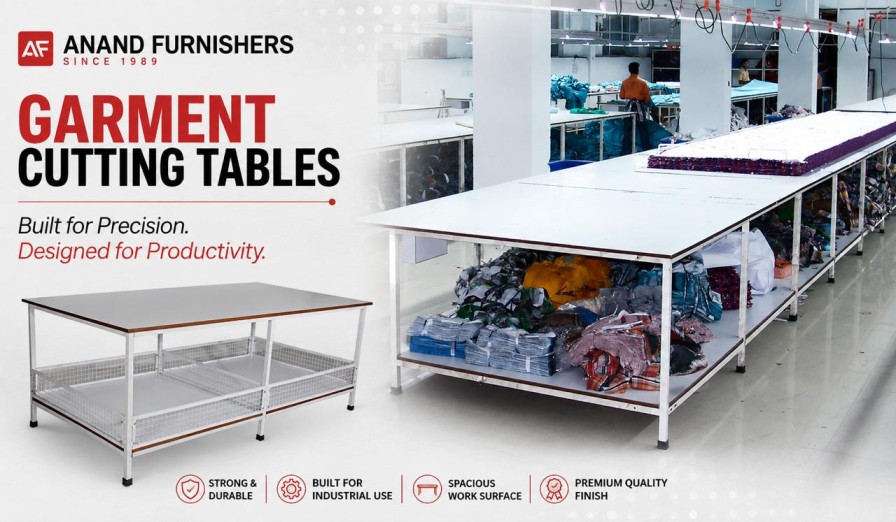
Long before a shirt or a pair of trousers takes shape on a sewing line, it starts as flat fabric on a cutting table. Every layer that gets spread, every pattern that gets marked, and every cut that gets made happens on this one surface — which makes garment cutting tables one of the most consequential pieces of equipment in any garment factory, even though they rarely get the attention that machinery does.
What Actually Makes a Cutting Table Work
A cutting table’s job sounds simple — hold fabric flat while it gets marked and cut — but the details matter more than they seem to. The surface has to stay perfectly flat under the weight of dozens of stacked fabric layers, without warping or developing the kind of uneven patches that throw off a pattern by a few millimetres and waste expensive fabric. That’s why garment cutting tables built with an MS pipe frame and a pre-laminated board top hold up so much better over years of daily use than tables made from ordinary wood or lighter materials — the steel frame keeps the structure rigid, while the laminated surface resists scratches, moisture, and the wear of blades and rulers moving across it every day. A clean white finish also makes a real difference on the floor: chalk marks, pattern lines, and measurements stay clearly visible against it, which matters when accuracy is the whole point.
Size matters just as much. A generously scaled table — Anand Furnishers’ standard cutting table runs a full 2400 x 1800mm — is what lets a cutting team spread and cut multiple layers of fabric at once, instead of constantly repositioning material across a surface that’s too small for the job. Height matters too: at 900mm, a table set at the right working level reduces the back and shoulder strain that adds up across a full shift of standing work.
Where These Tables Actually Earn Their Keep
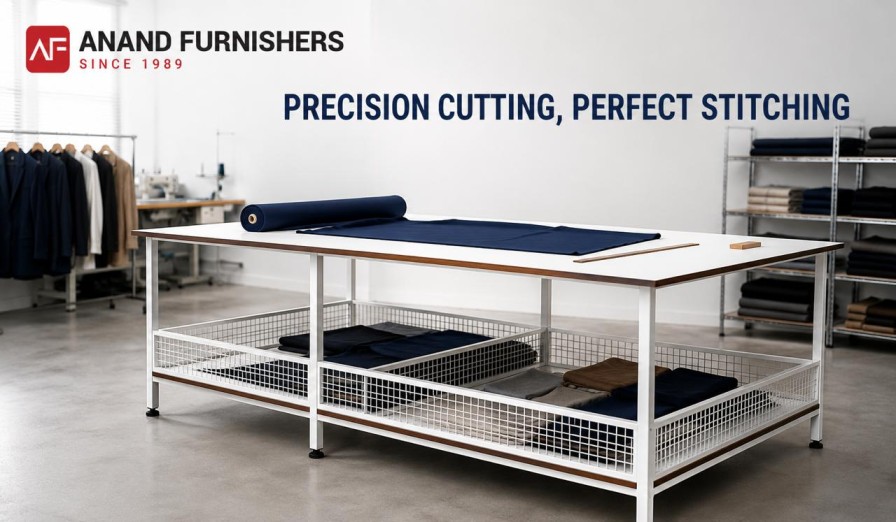
Garment cutting tables are the starting point in garment export houses, uniform manufacturing units, textile workshops, and tailoring operations of every size — anywhere fabric needs to move from a roll to a precisely cut piece, reliably and repeatedly. In a high-volume export unit, a cutting table has to withstand daily use for years without the surface degrading or the frame loosening. In a smaller workshop, the same table needs to be dependable enough that a missed measurement doesn’t turn into wasted fabric and a missed deadline.
Built by People Who’ve Been Doing This Since 1989
Anand Furnishers Pvt. Ltd. has been manufacturing steel, wooden, office, and industrial furniture since 1989, and garment industry furniture is one of the areas the company knows best. Their cutting tables are built on MS pipe frames with pre-laminated board tops, sized to handle real production volumes rather than sample-room quantities — the kind of table meant to be used every working day, not occasionally.
A cutting table is also rarely the only piece of equipment a garment unit needs. Anand Furnishers also manufactures line production tables, checking and finishing tables, industrial trollies, and storage racks — the full set of furniture a garment factory actually runs on, all built to the same standard.
Get the Foundation Right
Everything that happens after the cutting table — sewing, checking, finishing — depends on the accuracy of what happens here first. Choosing a durable, correctly sized garment cutting table isn’t a minor purchasing decision; it’s one that affects fabric wastage, production speed, and worker comfort for years to come.
Explore Anand Furnishers’ full range of garment cutting tables at anandfurnishers.com, or reach out directly to discuss sizing and requirements for your production floor.