
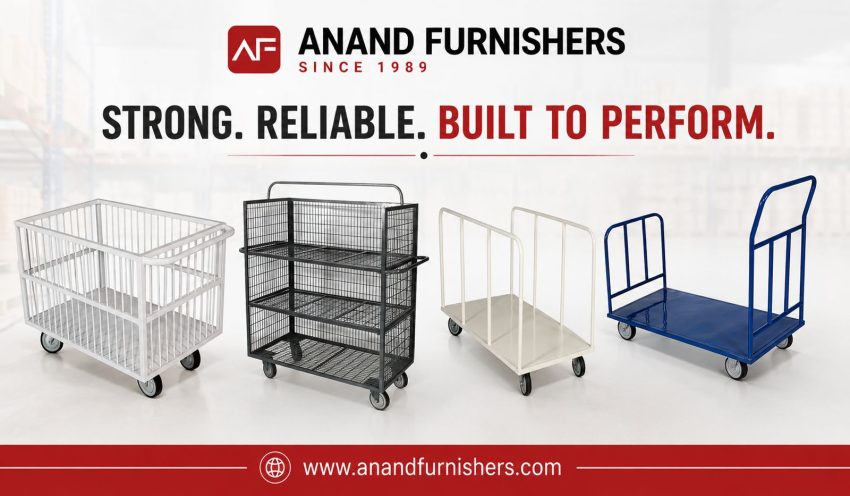
A garment factory moving fabric rolls needs a very different trolley from one shifting freshly cut pieces to the sewing line, which is exactly why serious industrial trolley manufacturers don’t build just one design. Instead, they offer a range of trolleys, each shaped around a specific stage of work — because a trolley that’s right for one job is often the wrong choice for another.
Anand Furnishers has been manufacturing industrial trolleys and related garment industry furniture since 1989. In this blog, we’ll walk through the common types of industrial trolleys, where each one is typically used, and what to check before choosing a manufacturer.
Common Types of Industrial Trolleys
Not every trolley on a factory floor is doing the same job. Depending on the stage of production, you’ll usually find:
- Finished goods trolleys — sturdier, closed-panel designs built to move completed products safely to packing or dispatch
- Processing trolleys — open mesh construction that keeps materials visible and ventilated while work is still in progress
- Cutting trolleys — sized to carry freshly cut fabric pieces from the cutting table to the next production stage
- Fabric roll trolleys — larger, reinforced trolleys built specifically to handle the weight and length of fabric rolls
- Hanger trolleys — fitted with rails for hanging garments, often with removable shelves for additional storage
- Washing trolleys — designed to carry garments to and from washing or finishing areas, sometimes fitted with a bin
- Operator side bins and stands — smaller units placed directly at individual workstations for quick access to materials
Most factories don’t rely on just one of these — they use a mix, matched to each stage of the workflow.
Where Industrial Trolleys Are Used
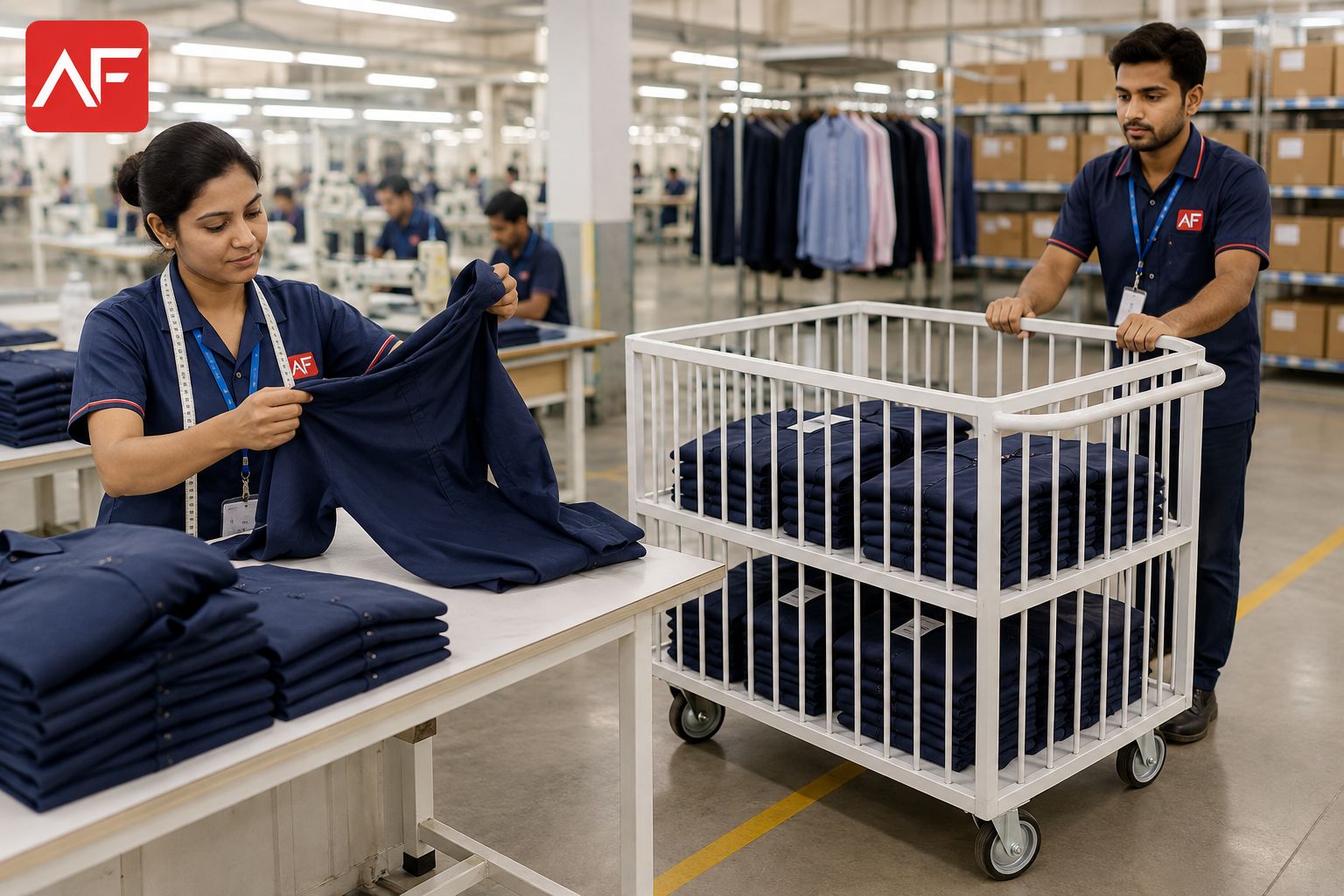
Industrial trolleys show up wherever materials or products need to move efficiently between stages of work. Common settings include:
- Garment and textile factories, moving fabric, cut pieces, and finished garments between departments
- Warehouses and distribution centers, for shifting stock between storage and dispatch areas
- Manufacturing plants, transporting raw materials and components along the production line
- Retail and commercial stockrooms, keeping inventory organized and easy to move
- Workshops and service centers, for moving tools, parts, and equipment between work areas
Because the loads and layouts vary so much between these settings, the trolley design usually needs to be matched to the specific job rather than picked off a generic shelf.
What to Look for in Industrial Trolley Manufacturers
Beyond the type of trolley, the manufacturer behind it affects how well it holds up over daily use. Look for:
- MS pipe or MS sheet construction, for a frame strong enough to handle repeated loading
- Powder-coated finish, to resist rust and wear from daily handling
- Heavy-duty wheels or castors, for smooth movement across factory or warehouse floors
- Custom sizing, since standard dimensions don’t always fit every space or product
- Consistent build quality across units, especially when ordering multiple trolleys for one facility
Anand Furnishers builds each trolley type to these standards, with the ability to customize size, material, and finish based on what a specific production line actually needs.
Simple Maintenance Tips to Extend Trolley Life
A little regular upkeep goes a long way toward keeping industrial trolleys safe and efficient over years of daily use:
- Check wheels and castors regularly for wear, since smooth movement depends on them staying in good condition
- Inspect welds and joints periodically, especially on trolleys that carry heavier loads
- Keep loads within the rated capacity to avoid unnecessary strain on the frame
- Touch up chipped powder coating promptly, to stop rust from starting underneath
- Clean mesh and panel surfaces so buildup doesn’t interfere with how materials sit or move
FAQs About Industrial Trolleys
- What is an industrial trolley used for?
It’s used to move materials, components, or finished goods between different stages of work, commonly in factories, warehouses, and workshops. - What’s the difference between a processing trolley and a finished goods trolley?
A processing trolley typically has open mesh sides for visibility and airflow while work is in progress, while a finished goods trolley has closed panel sides to protect completed products during transport. - Can industrial trolleys be customized in size?
Yes. Reliable industrial trolley manufacturers can adjust dimensions, materials, and finish to match your specific floor space and load requirements. - What material are industrial trolleys usually made from?
Most are built from MS (mild steel) pipe, sheet, or angle, often finished with a powder coating for durability and rust resistance. - Do industrial trolleys need special wheels for factory floors?
Yes, heavy-duty wheels or castors are important for smooth, safe movement, especially on uneven or heavily trafficked factory floors. - Which industries use industrial trolleys the most?
Garment and textile manufacturing, warehousing, general manufacturing, and retail stockrooms are among the industries that rely on them most heavily. - How do I choose the right industrial trolley manufacturer?
Look for manufacturing experience, the ability to customize trolleys for your specific use case, sturdy MS construction, and consistent quality across orders.
Conclusion
Choosing the right trolley starts with understanding what it actually needs to do — carry finished stock, move fabric rolls, or support work in progress. As experienced industrial trolley manufacturers, Anand Furnishers builds trolleys suited to each of these jobs, with the option to customize size and finish for your facility. Get in touch to discuss the right trolley setup for your operation.